• Scottie Scheffler Makes an Insane Amount of Money on The PGA Tour

    Scottie Scheffler Makes an Insane Amount of Money on The PGA Tour

    Scottie Scheffler’s financial ascent in the world of golf has been nothing short of extraordinary. As of recent reports, the world No. 1 golfer’s career earnings on the PGA Tour are approaching a staggering $100 million, a testament to his on-course prowess and consistent performance. Scheffler, who has achieved significant milestones in his career, including winning prestigious tournaments like The Masters at Augusta, The Players Championship, and the WM Phoenix Open, is rapidly becoming one of the most lucrative athletes in sports.


    The 2024 calendar year has marked Scheffler’s most financially rewarding period to date. His earnings from on-course activities alone have reached an impressive $28 million this year. When combined with his performance from previous years and additional revenue streams, such as the FedEx Cup and the Player Impact Program (PIP)—a system designed to reward players who generate substantial interest and engagement with the PGA Tour—his total earnings approach the $100 million mark. According to data posted by CBS Sports golf reporter Kyle Porter, Scheffler’s earnings from 2022 to the present include $63 million from on-course play, $15 million from Comcast Top 10, $11.5 million from PIP, and $7.75 million from the FedEx Cup, although the 2024 figures are not yet complete.


    The numbers illustrate a remarkable financial trajectory for Scheffler. Beyond his earnings from competitive play, Scheffler has also accrued substantial revenue through sponsorship deals. In 2023 alone, his off-course earnings from endorsements with major brands like TaylorMade, Nike, and Rolex amounted to $20 million. This figure highlights the growing commercial appeal of Scheffler, which is expected to rise as his career progresses and his visibility in the sport continues to expand.


    Scheffler’s financial achievements place him on a potential path to becoming one of the next billion-dollar athletes, joining the ranks of high-profile sports figures such as Cristiano Ronaldo, LeBron James, and Floyd Mayweather. This prospect is not unprecedented in the world of golf, as Tiger Woods has already achieved billionaire status through a combination of his on-course success and lucrative endorsement deals.


    One notable recent highlight for Scheffler was his $8 million windfall from the Comcast Top 10, despite not competing in the Wyndham Championship held in Greensboro, North Carolina. This sum further propels his earnings towards the $100 million mark over a three-year span.


    As the regular PGA Tour season wraps up, Scheffler remains active in other competitions, including the FedEx Cup, where the winner can earn up to $25 million. This potential prize, combined with his previous earnings, continues to bolster Scheffler’s financial portfolio and underscores his dominant presence in professional golf.


    Overall, Scottie Scheffler’s career trajectory not only underscores his exceptional skill and success on the golf course but also highlights his growing financial impact as a leading figure in the sport. With his continued success and increasing endorsement deals, Scheffler is well-positioned to achieve remarkable financial milestones in the years to come.

  • Bryson DeChambeau’s Remarkable PGA Earnings Highlight His Stellar Season

    Bryson DeChambeau’s Remarkable PGA Earnings Highlight His Stellar Season

    Bryson DeChambeau’s Remarkable PGA Earnings Highlight His Stellar Season


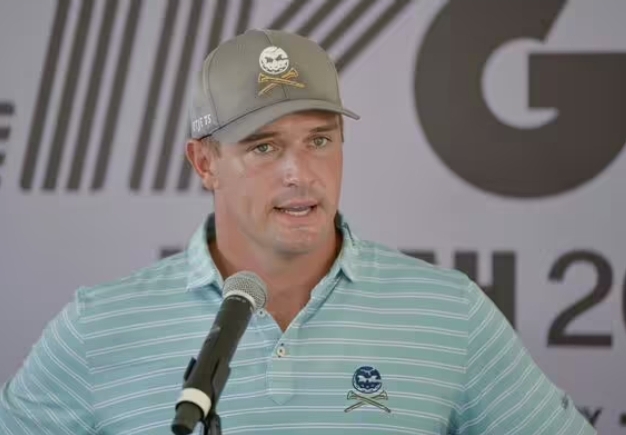
    Golf, often characterized by its unique blend of tradition and innovation, has recently witnessed a remarkable figure in the sport—Bryson DeChambeau. Known for his unconventional approach and trailblazing style, DeChambeau continues to make headlines and capture the attention of fans and analysts alike. This season, DeChambeau’s achievements have once again set him apart, especially given his impressive earnings despite participating in a limited number of PGA events.


    Bryson DeChambeau’s rise to prominence has been anything but ordinary. His journey began with an unconventional approach to the game, marked by his commitment to scientific principles and a distinctive swing style. This approach gained widespread attention when he leveraged his YouTube channel to further engage with fans and showcase his unique golfing insights. His breakthrough moment came when he clinched the US Open, defeating Rory McIlroy in a dramatic and memorable showdown.


    Following his major victory, DeChambeau’s influence extended beyond the golf course. He featured former President Donald Trump on his YouTube channel, which led to a record-breaking viewership for that particular episode. This fusion of golf with broader cultural and media landscapes has established DeChambeau as a dynamic and influential figure in the sport.


    Despite his significant impact on golf, DeChambeau’s recent career has taken an interesting turn. His decision to join the LIV Golf Tour has limited his appearances in traditional PGA Tour events, which has inevitably led to fewer opportunities for fans to see him compete on television. However, his participation in the four major PGA-sanctioned tournaments this year has been nothing short of impressive.


    A notable statistic for the current season is that DeChambeau has managed to secure a place in the top ten of the PGA Tour’s money list. This achievement is particularly striking considering that he competed in only four PGA events throughout the year. Golf journalist Dylan Dethier has highlighted this exceptional statistic, illustrating the significant earnings DeChambeau has accrued from his appearances.


    The bulk of DeChambeau’s earnings, nearing $7 million for the season, came primarily from the US Open. His performance at this event was nothing short of spectacular, with DeChambeau earning over $4 million from his triumphant performance. His success was not confined to the US Open alone; he also had commendable finishes in other major tournaments. DeChambeau secured the runner-up position at the PGA Championship and finished sixth at the Masters, showcasing his consistent high-level performance across different courses.


    While DeChambeau did face challenges at The Open Championship held at Royal Troon, where he struggled to make a significant impact, his overall performance throughout the season has been impressive. This combination of high earnings and notable finishes underscores his continued relevance and prowess in the sport, despite fewer appearances on the PGA Tour.


    In addition to his earnings from PGA events, DeChambeau’s financial success is further augmented by his participation in the LIV Golf Tour. This alternative golfing circuit has contributed substantially to his income, reinforcing his status as one of the wealthiest and most influential golfers in the world today.


    Bryson DeChambeau’s season has been marked by remarkable achievements and financial success, underscoring his status as a trailblazer in modern golf. His ability to achieve significant earnings despite a limited number of PGA events is a testament to his exceptional skill and the impact he continues to have on the sport. As golf fans eagerly anticipate his future performances, DeChambeau’s journey remains a captivating story of innovation, success, and influence in the world of golf.

  • Max Greyserman said to have done something ‘incredible’ immediately after final round collapse at the Wyndham Championship

    Max Greyserman said to have done something ‘incredible’ immediately after final round collapse at the Wyndham Championship

    Max Greyserman Receives Praise for Positive Attitude Despite Dramatic Final Round Collapse at Wyndham Championship


    Max Greyserman has garnered widespread admiration despite enduring a dramatic collapse during the final round of the Wyndham Championship. The PGA Tour rookie, who had been on the brink of his first victory, faced a rollercoaster finish that saw his significant lead evaporate in the closing holes.


    Entering the final stretch of the tournament at Sedgefield Country Club, Greyserman was in a commanding position, leading by four strokes with just five holes remaining. His performance up to that point had been stellar, highlighted by a brilliant eagle on the 13th hole, which seemed to set him on a clear path to victory.


    However, the course proved to be an unpredictable adversary. On the 14th hole, Greyserman experienced a catastrophic setback with a quadruple bogey, a severe drop that turned the tide against him. The challenge of Sedgefield Country Club, described as ‘nasty’ by veteran golfer Matt Kuchar, lived up to its reputation in the final stages of the tournament.


    Despite this setback, Greyserman managed to regroup and responded with a birdie on the 15th hole, demonstrating his resilience. Unfortunately, his struggle continued as he faced another significant setback on the 16th hole, where he endured a four-putt double bogey. This series of mistakes allowed Aaron Rai to capitalize on Greyserman’s misfortunes and ultimately claim the title.


    Despite the disappointment of falling short, Greyserman maintained an upbeat perspective on his performance. In the aftermath of the round, he expressed a positive outlook on his overall play. Reflecting on his performance, Greyserman acknowledged the highs and lows of the final round, stating, “I played really good golf, executed really well. Had a four or five shot lead with five holes to go. If you’re doing that on a PGA Tour event you are doing something exceptionally well. That is something I am going to walk away with. And making that birdie after making that eight. I am going to walk away with that.”


    Greyserman emphasized the importance of focusing on the positives and using the experience to build confidence. He further commented, “I am going to walk away with more confidence, look at the positive things and learn from the mistakes.”


    The admiration for Greyserman’s attitude was echoed by fellow professionals and analysts. Paige Mackenzie, a well-respected figure in golf commentary, was particularly impressed by Greyserman’s demeanor. On Golf Central, Mackenzie praised Greyserman’s ability to maintain perspective and composure, stating, “How good was that interview? He had such incredible perspective so quickly and immediately walking off the green. I think we saw that throughout the day too. We saw his temperament throughout the day staying pretty level and him being able to make mostly good decisions outside of perhaps the lay up on the 14th. But very impressive as it relates to taking away the positives from today.”


    While Aaron Rai celebrated his first PGA Tour victory after 89 starts with a remarkable final round 64, Greyserman’s performance throughout the event at Sedgefield Country Club remained noteworthy. Despite the final round’s turmoil, the 29-year-old’s display of skill and his subsequent positive approach to the outcome of the tournament earned him respect and recognition from the golf community.


    In conclusion, Max Greyserman’s final round at the Wyndham Championship, marked by a dramatic collapse and eventual second-place finish, highlighted both the volatility of professional golf and the importance of resilience. His ability to stay positive and extract valuable lessons from the experience stands as a testament to his character and potential as he continues his career on the PGA Tour.

  • Iga Świątek oświadczyła, że nie ma sensu rozmawiać o pieniądzach i że nie zamierza wymieniać swoich zarobków z 2024 roku na złoto olimpijskie.

    Iga Świątek oświadczyła, że nie ma sensu rozmawiać o pieniądzach i że nie zamierza wymieniać swoich zarobków z 2024 roku na złoto olimpijskie.

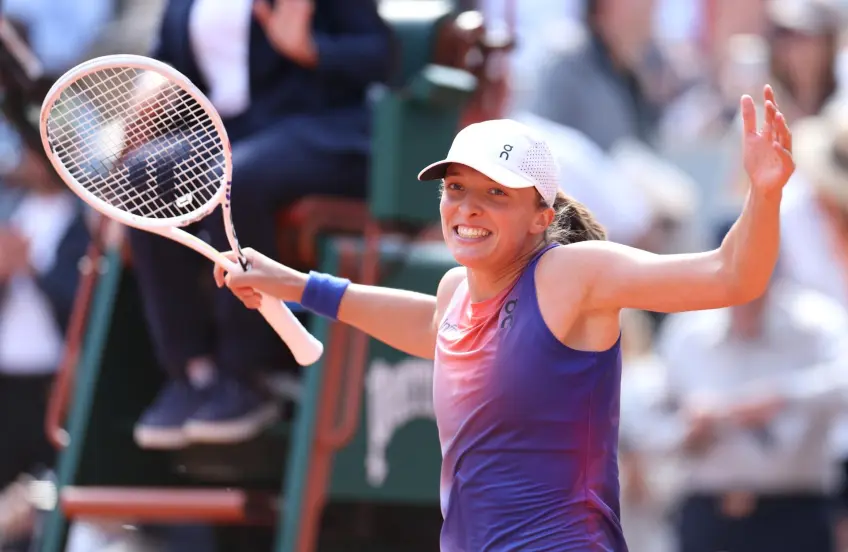
    Iga Świątek niedawno podkreśliła różnicę między grą dla swojego kraju na igrzyskach olimpijskich a grą dla pieniędzy. Polka zdobyła historię, wygrywając pierwszą w historii medale tenisową dla swojego kraju na Igrzyskach Olimpijskich w Paryżu w 2024 roku. Przed rozpoczęciem wydarzenia Świątek była uważana za faworytkę, ponieważ mecze odbywały się na Roland Garros, miejscu, które dominowała przez ostatnie kilka lat.


    23-letnia zawodniczka zaczęła turniej w znakomitym stylu, eliminując Irinę-Camelię Begu w dwóch setach. Kontynuowała swoją błyskotliwą formę, pokonując Diane Parry i Wang Xiyu w kolejnych rundach. W ćwierćfinale Świątek zmierzyła się z rozstawioną z ósmym numerem Amerykanką, która musiała się wycofać w decydującym secie, co pozwoliło Polce awansować do półfinałów. Topowa zawodniczka została jednak zaskoczona przez przyszłą złotą medalistkę Zheng Qinwen, która wygrała w dwóch setach, co zakończyło jej marzenia o zdobyciu złota i 25-meczową serię zwycięstw na tym obiekcie. Niemniej jednak, numer 1 na świecie pokonała Annę Schmieldovą 6-2, 6-1, zdobywając brązowy medal dla swojego kraju w tym prestiżowym wydarzeniu.


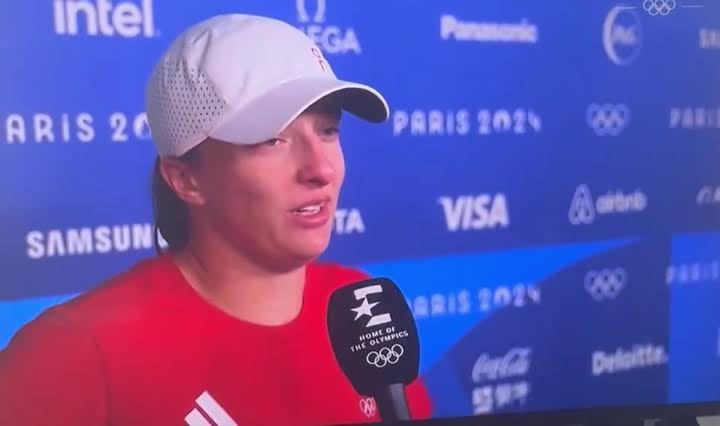
    Iga Świątek usiadła do rozmowy z SportoweFakty, gdzie zapytano ją, czy oddałaby wszystkie zarobione w 2024 roku pieniądze za złoty medal olimpijski. Odpowiedziała, że te dwie rzeczy są nieporównywalne i że nie ma sensu wymieniać swojego złotego medalu na pieniądze. “Nie jestem w stanie odpowiedzieć na to pytanie. Nie ma sensu wkładać takiego osiągnięcia w jakiekolwiek ramy. Nie ma sensu rozmawiać o pieniądzach w tym kontekście.”


    Świątek wyjaśniła również, jak zawodnik nie rywalizuje na igrzyskach olimpijskich, aby zarabiać pieniądze, ponieważ obie rzeczy wymagają całkowicie różnych motywacji. Powtórzyła, że porównania nie mają sensu i nie uważa, aby medal olimpijski powinien być porównywany z jakimkolwiek innym osiągnięciem. “Nie gra się na igrzyskach olimpijskich dla pieniędzy, to są zupełnie inne motywacje i cele. Nie jestem w stanie odpowiedzieć na to pytanie. Nie ma sensu wkładać takiego osiągnięcia w jakiekolwiek ramy. Nie ma sensu rozmawiać o pieniądzach w tym kontekście. Nie gra się na igrzyskach olimpijskich dla pieniędzy, to są zupełnie inne motywacje i cele.”


    Iga Świątek ma teraz przed sobą północnoamerykański swing na twardych kortach, zaczynając od Cincinnati Open. Jest rozstawiona z numerem 1, co oznacza, że otrzyma wolny los w pierwszej rundzie i zmierzy się z zwyciężczynią meczu pierwszej rundy pomiędzy Ajlą Tomljanović a Varvarą Grachevą w swoim pierwszym meczu turniejowym.


    Świątek ma korzystny bilans 3-0 w swoich starciach z Australijką i wygrała swoje jedyne spotkanie z Francuzką. Iga Świątek była bliska wygrania turnieju WTA 1000 w zeszłym roku, ale została pokonana przez przyszłą mistrzynię Coco Gauff, co jest jedynym przypadkiem, w którym Amerykanka pokonała Polkę w ich 12 spotkaniach.

  • Keegan Bradley adds 9-time Tour winner as the second Ryder Cup vice captain

    Keegan Bradley adds 9-time Tour winner as the second Ryder Cup vice captain

    In a significant development for Team USA, Keegan Bradley has announced that Brandt Snedeker will serve as a vice captain for the 2025 Ryder Cup. This decision marks an important step in Bradley’s efforts to assemble a dynamic support team for the upcoming matches, which are set to take place at Bethpage Black, a venue known for its challenging conditions and enthusiastic crowds.

    A New Role for a Proven Veteran

    Brandt Snedeker’s appointment as vice captain will be his first role of this nature, although he brings a wealth of experience to the position. A nine-time PGA Tour winner, Snedeker has enjoyed a successful career on the golf course, including a notable 4-2 record in Ryder Cup competitions. At 43 years old, Snedeker is seen as part of a new, fresh wave of leadership, complementing the youthful energy that Keegan Bradley aims to infuse into the team.

    Keegan Bradley, who was recently named the captain for the 2025 Ryder Cup, had previously announced Webb Simpson as another vice captain. With these appointments, Bradley is clearly focused on building a diverse and effective support team that can help guide Team USA to victory in what promises to be a highly competitive Ryder Cup.

    Snedeker’s Commitment to the Ryder Cup Spirit

    In his new role, Snedeker is expected to bring a deep passion and pride for the Ryder Cup, elements he believes are crucial for a successful campaign. “The Ryder Cup is unlike anything in our sport,” Snedeker said. “I hope to bring the passion and pride to help Keegan deliver his vision of what a Ryder Cup in New York should look like.” His enthusiasm and commitment to the event are expected to be instrumental in rallying the team and fostering a strong sense of unity and purpose.

    Recent Challenges and Future Prospects

    Despite his significant achievements in the past, Snedeker has faced recent challenges. Plagued by injuries over the past few years, he struggled during the current season, missing 17 of 22 cuts and finishing outside the top 200 in the FedExCup standings. However, these setbacks have not diminished his stature in the golfing community. Later this month, Snedeker will be honored with the Tour’s Payne Stewart Award, recognizing his exemplary character and sportsmanship throughout his career.

    Looking Ahead

    As the 2025 Ryder Cup approaches, the appointment of Snedeker as vice captain adds an exciting new dimension to Team USA’s strategy. With a blend of experience, passion, and a fresh perspective, Snedeker is poised to play a crucial role in the team’s efforts to achieve success on home soil. Golf fans and followers of the Ryder Cup will undoubtedly be keenly watching how this new leadership team shapes the future of American golf.

    With the team now taking shape, all eyes will be on how Keegan Bradley and his vice captains, including Snedeker, will navigate the challenges and opportunities that lie ahead. As the countdown to the Ryder Cup begins, the anticipation continues to build, promising an exciting and highly competitive tournament in 2025.

  • Scottie Scheffler set for bonus significantly larger than Rory McIlroy’s as PGA Tour confirms payout

    Scottie Scheffler set for bonus significantly larger than Rory McIlroy’s as PGA Tour confirms payout

    Scottie Scheffler’s incredible 2024 just got even better with the world No. 1 receiving a massive bonus from the PGA Tour, almost double the size of Rory McIlroy’s.

    Scheffler has won six times on the PGA Tour this season, including a memorable second Masters title, and he followed it up with victory at the Olympics in Paris last week to make it a golden year for the 28-year-old.

    The American has raked in a massive £22million in on-course earnings this season, and his bank balance swelled further on Monday with confirmation he had finished atop the Comcast Business Tour Top 10 rankings. The list acts as the PGA Tour’s regular season order of merit, and Scheffler finished top by a huge margin

    For his efforts, he will receive a £6.2m bonus, and he has huge opportunities to boost his winnings in the final three weeks of the season through the FedEx Cup Playoffs. The FedEx St. Jude Championship and BMW Championship have £3.1m purses going to the winners, while the Tour Championship title is worth an eye-watering £19.6m.

    It’s been an incredible year for me both on and off the course, so to finish up the regular season by earning the top spot in the Comcast Business Tour Top 10 is an honour,” Scheffler said. “Every year I try to perform and compete to the best of my abilities, so this award really represents the hard work put in throughout the course of the season with the support of my family and team.”

    Xander Schauffele, winner of the PGA Championship and The Open, comes in second on the list, and receives a bonus of £4.7m, while Rory McIlroy finished third and receives £3.8m. Collin Morikawa takes £3.4m for finishing fourth.

    Wyndham Clark (£3.1), Ludvig Aberg (£2.7m) and Sahith Theegala (£2.2m) finished in fifth, sixth and seventh respectively, with Hideki Matsuyama (£1.9m), Sungjae Im (£1.7m) and Shane Lowry (£1.6m) rounding off the rankings.

    Scheffler’s remarkable run began in March at the Arnold Palmer Invitational, where he romped to victory by five shots. A week later, he held his nerve when Schauffele, Clark and Brian Harman faltered to win The Players Championship.
    Masters glory followed in April, donning the green jacket for the second time after mastering brutally windy conditions, but he that was not enough for the two-time major champion, claiming the RBC Heritage title eight days later.
    Another double followed in June, winning the Memorial Tournament and the Travelers to emphasise his credentials as the best – and most consistent – player on the planet. Schauffele’s pair of major triumphs threatened to take the shine of Scheffler’s year, but he produced perhaps the best closing round of his career to go nine-under-par at Le Golf National to snatch Olympic gold from Tommy Fleetwood.

    Scheffler stars as a heavy betting favourite for the FedEx St. Jude Championship, which tees off at TPC Southwind in Memphis, Tennessee on Thursday. He starts at 15/4, with Schauffele and McIlroy priced at 8/1 and 19/2 respectively.


  • Tiger Woods explains how to hit one of his go-to shots around the green

    Tiger Woods explains how to hit one of his go-to shots around the green

    Tiger Woods has just about every shot imaginable in his arsenal. Whether the situation requires the ball to go high or low, left or right, the 15-time major winner has the shot in his bag to get it done.

    Watching Woods work around the greens you can see his creativity really shine. Rarely on the course does he hit just a stock shot with his short game. Every scenario is a little bit different, and each requires specific adjustments in order to have the best chance of chipping it close.

    One of Woods’ go-to shots around the greens comes in the form of a “draw chip.” And in today’s edition of Play Smart, we’re going to hear from the man himself on how to hit it.

    How to hit Tiger’s draw chip

    Sometimes getting the ball close from short range requires a little bit of creative thinking. For Woods, that comes in the form of shaping the ball left or right to get the ball close.

    For a shot that needs to move left-to-right — or one that might be affected by a tough lie — he turns to his patented draw chip.

    Executing the shot is simple. According to Woods, he opens the face just a touch, keeps his hands forward at address and then when the club head is approaching impact, he tries to close the face down and move his body forward.

    “I’ll get more spin,” Woods says. “But I’m also ensuring that I don’t fat it.”

    Next time you’re around the greens and are worried about catching the ball a little heavy, try focusing on hitting a draw chip. You’ll be amazed how easy it is to execute — and how useful it is to have in your arsenal.


  • Xander Schauffele’s prediction for Rory McIlroy matches up with Tiger Woods claim

    Xander Schauffele’s prediction for Rory McIlroy matches up with Tiger Woods claim

    Xander Schauffele has set his sights on securing the rare career grand slam in golf – a dream fellow pro Rory McIlroy has been chasing for years. The career grand slam is achieved when a golfer wins all four major tournaments during their playing life, and Schauffele claimed two out of four titles by winning the PGA Championship and The Open Championship.

    The American golfer is now halfway to realising his dream, just one major title behind McIlroy. The Northern Irish golfer only needs to win the Masters Tournament to complete his career grand slam. To secure his own, Schauffele needs to win the US Open and the Masters. Speaking to MailSport, the 30-year-old admitted that this is a goal he has been dreaming about for a long time.

    Schauffele said: “The career slam has always been written down as something I’ve wanted. Getting to two after not having one for such a long time is something that feels really good. Expectations can be a mean thing and I think all people in sport have a certain amount of cortisol in the body. You stress, you get anxious, have hard times. I have.

    So to get to two is great, and it makes me remember writing this stuff down with my dad at 13 or 14 – number one player in the world, majors, all these things.”

    Schauffele narrowly missed adding a second Olympic gold to his collection off the back of his Tokyo triumph, finishing tied for ninth at 12-under-par in the tournament at the Paris Games, closely trailing the eventual victor Scottie Scheffler. Meanwhile, McIlroy had a more successful tournament and ended up tying for fifth with a commendable score of 15-under-par – a mere four strokes from the top.

    While the pair didn’t achieve any medals at the Olympic Games, both Schauffele and McIlroy are fully focused on their ultimate goal of the career grand slam. Golfing icon Tiger Woods is convinced that it is only a matter of time for McIlroy, as he praised the talent and drive the Northern Irish star possesses on the course.

    Before the Masters Tournament kicked off back in April, five-time winner Woods praised McIlroy’s talent, as per Golf Digest.

    I think Rory will be a great Masters champion one day, and it could be this week. You never know. I just think that the talent he has, the way he plays the game and how the golf course fits his eye, it’s just a matter of time.”


  • British Open 2024: Tiger Woods fired back at Colin Montgomerie, but Monty knows the truth

    British Open 2024: Tiger Woods fired back at Colin Montgomerie, but Monty knows the truth

    TROON,Scotland — Only a chosen few are awarded “The Stop.” It is both earned and conferred, and always cashed in at the Swilcan Bridge. The legend makes his way over the crossing, pauses, perches his leg up on the stone ledge, turns away from the Old Course and toward the fans to his right and behind him, then back to the town of St. Andrews and to the people craning their necks from pubs and hotel windows to say they saw it, and waves. The Stops of yesteryear are run annually on Open broadcasts and pictures of The Stop are plastered in clubhouses across the world, because The Stop matters, a graceful transition of a golf legend from the pangs of now into the gloss of the past.

    Tiger Woods was bestowed The Stop in 2022. It made sense; he was nine over through 35 holes, 20-something shots behind the leader and miles from the cut. He was just 46 years old, but his return from a savage car accident raised plenty of questions about an already tenuous future, and with the R&A likely deviating from its tradition of hosting the Open at the St. Andrews every five years it was unclear when the Auld Gray Toon would host again … and what type of shape Woods would be in when that time came.

    Woods is a student and historian. He is well aware of The Stop. What it means, to himself and to others. Over the past decade, he had preached a cognizance of the finish line. And yet, knowing what was ahead, Woods glided over the most famous bridge in golf, stride unbroken. He did raise his hat to the heavens, a concession made by his brain, but his legs were taking direction from his heart. At the 150th Open, Tiger Woods was given The Stop. He kept walking.

    “I hope people remember Tiger as Tiger was, the passion and the charismatic aura around him,” Colin Montgomerie said in an interview with The Times of London last week. “There is none of that now. At Pinehurst [for the U.S. Open], he did not seem to enjoy a single shot and you think, ‘What the hell is he doing?’ He’s coming to Troon, and he won’t enjoy it there either.” Montgomerie later added, in response to Woods’ comments last month that his competitive days may be numbered, “Aren’t we there? I’d have thought we were past there. There is a time for all sportsmen to say goodbye, but it’s very difficult to tell Tiger it’s time to go. Obviously, he still feels he can win. We are more realistic.”

    To various extents for the last decade, similar eulogies have been made about Woods’ career—only for Woods to prove how much life he has left. Perhaps that’s partly why Monty’s remarks made the rounds. But as blunt as Montgomerie was, the collective response has been just as telling, because there has been little, if any, rebuttal. Montgomerie said what we all know to be true:

    In sports, everything ends badly. Otherwise, it wouldn’t end.

    Badly is a sober assessment of Woods’ golf as of late. More than as of late: Since winning the 2019 Masters he has failed to finish inside the top 20 at a major and has either missed the cut or withdrawn in five of the last seven. He’s played four rounds of an official tournament just three times in the last four seasons. This is partly an upshot of the fact he hardly plays at all. The last time Woods teed it up at an event that wasn’t a) a major, b) his Genesis Invitational or c) a silly-season event was in the summer of 2020. That is the profile of a ceremonial figure … which Woods was at the U.S. Open, in the field thanks to a special exemption from the USGA. He fought, but Pinehurst painfully illustrated it was a test he could not pass. Golf pounds its chest about its meritocratic fields but Woods, in his current form, is more celebrity than competitor.


  • British Open 2024: Why Scottie Scheffler loves this tiny but important change at Royal Troon: ‘It was a bit of luck’

    British Open 2024: Why Scottie Scheffler loves this tiny but important change at Royal Troon: ‘It was a bit of luck’

    last year in the first round at the British Open, Rory McIlroy was greenside in two shots at the par-5 finishing hole, yet five minutes later he fist-pumped a 10-foot par save. Why? McIlroy was nestled under the lip of one of Royal Liverpool’s nasty bunkers. He tried to play out sideways and failed. His second attempt required one foot in, one foot out of the bunker. The whole scene even sparked a minor rules controversy.

    It all stemmed from a problem Scottie Scheffler warned about earlier in the week. “Here it seems like the faces of every bunker have almost a downslope going towards it,” Scheffler said last year. “I don’t think that’s something I particularly like in a golf course. I think it doesn’t reward the good shots as much.”

    We’re used to seeing these chaotic scenes in pot bunkers at The Open, but last year the unusual shape of the bunkers that Scheffler alluded to made them particularly penal.

    You don’t want to be in these bunkers,” 2009 Open champion Stewart Cink said of Royal Liverpool. “They’re so flat. The bottoms of them are so flat that if a ball comes in with any momentum, it’s just going right up to the lip and stop. There’s not a little upslope that helps you at all. They are very penal.”

    The difficulty of bunkers being flat is exactly what Cink and Scheffler described. There is nothing preventing the ball from rolling underneath the face. This isn’t an issue, of course, on most American courses, where the bunkers naturally rise up to the lips, but on links with riveted-face pots, the bottom of the bunkers can be nearly perfectly level.

    That’s how you get scenes like McIlroy on the 18th hole last year, trying to play sideways away from the hole and still not able to get it out.

    But we’re likely to see far less of that this year at Royal Troon, as Scheffler says the R&A have raked the bunkers a little differently. Scheffler described in his Tuesday press conference that the bunkers are built up near the edges to encourage balls to filter back into the middle of the sand, as you can see below.


    Last year in the first round at the British Open, Rory McIlroy was greenside in two shots at the par-5 finishing hole, yet five minutes later he fist-pumped a 10-foot par save. Why? McIlroy was nestled under the lip of one of Royal Liverpool’s nasty bunkers. He tried to play out sideways and failed. His second attempt required one foot in, one foot out of the bunker. The whole scene even sparked a minor rules controversy.

    It all stemmed from a problem Scottie Scheffler warned about earlier in the week. “Here it seems like the faces of every bunker have almost a downslope going towards it,” Scheffler said last year. “I don’t think that’s something I particularly like in a golf course. I think it doesn’t reward the good shots as much.”

    “You don’t want to be in these bunkers,” 2009 Open champion Stewart Cink said of Royal Liverpool. “They’re so flat. The bottoms of them are so flat that if a ball comes in with any momentum, it’s just going right up to the lip and stop. There’s not a little upslope that helps you at all. They are very penal.”

    RELATED: Tiger Woods fired back at Colin Montgomerie, but Monty knows the truth

    The difficulty of bunkers being flat is exactly what Cink and Scheffler described. There is nothing preventing the ball from rolling underneath the face. This isn’t an issue, of course, on most American courses, where the bunkers naturally rise up to the lips, but on links with riveted-face pots, the bottom of the bunkers can be nearly perfectly level.

    That’s how you get scenes like McIlroy on the 18th hole last year, trying to play sideways away from the hole and still not able to get it out.

    But we’re likely to see far less of that this year at Royal Troon, as Scheffler says the R&A have raked the bunkers a little differently. Scheffler described in his Tuesday press conference that the bunkers are built up near the edges to encourage balls to filter back into the middle of the sand, as you can see below.

    Players are more likely to be playing from the middle of the bunkers this week at Royal Troon.

    Luke Walker/R&A

    “I love how they changed how they rake the bunkers this year with the more traditional sloping coming off the walls,” Scheffler said.

    While this makes one of Royal Troon’s toughest features slightly less daunting, Scheffler says it makes the course play more fair and less reliant on luck.

    “Last year I thought it was a bit silly how they flattened out each bunker,” he said. “The bunkers are still a penalty enough when the ball isn’t up against the lip. It was a bit of luck whether or not your ball would bury into the face because you have a flat bunker and a wall

    This year, Scheffler says players have more of a fighting chance to get out of the deep bunkers, instead of being handcuffed like McIlroy. Since more balls will filter back into the middle of the bunkers this week, players will have the option to either take on the difficult shot and play straight ahead, or play it safe and go out sideways.

    “It leaves more opportunity for great shots and risk and reward,” he says.