Author: newuser

  • Scottie Scheffler has expressed deep thanks to his fans following the Paris 2024 Olympics. “I want to extend my heartfelt gratitude to all my supporters worldwide, especially those in my home country,” he said. “Your unwavering support during the Olympics meant so much to me. Thank you for standing by me—I promise to always cherish and love you.”

    Scottie Scheffler has expressed deep thanks to his fans following the Paris 2024 Olympics. “I want to extend my heartfelt gratitude to all my supporters worldwide, especially those in my home country,” he said. “Your unwavering support during the Olympics meant so much to me. Thank you for standing by me—I promise to always cherish and love you.”


    Scottie Scheffler has expressed deep thanks to his fans following the Paris 2024 Olympics. “I want to extend my heartfelt gratitude to all my supporters worldwide, especially those in my home country,” he said. “Your unwavering support during the Olympics meant so much to me. Thank you for standing by me—I promise to always cherish and love you.”

    In an emotionally charged statement that has touched the hearts of golf enthusiasts worldwide, Scottie Scheffler, the celebrated professional golfer, has conveyed his profound gratitude to his supporters. This heartfelt message follows his remarkable performance and experiences during the Paris 2024 Olympics, offering a deeply personal glimpse into his relationship with his fans.


    Scheffler, who has distinguished himself as one of the leading figures in golf, took to social media to share his appreciation. “I want to express my heartfelt gratitude to all my fans around the world, and especially to those in my country,” he began, setting the tone for a message filled with genuine emotion. His words reflect a deep sense of thankfulness for the unwavering support he has received, particularly during a high-stakes event that marked a significant moment in his career.


    The Paris 2024 Olympics represented a pivotal chapter in Scheffler’s journey. The competition was intense, and the challenges he faced were formidable. Yet, throughout it all, the steadfast support from his fans provided a source of motivation and strength. Scheffler acknowledged this crucial role, stating, “Your unwavering support during the Paris 2024 Olympics means so much to me.” This recognition highlights the importance of fan support in the world of sports, emphasizing how it can significantly impact an athlete’s performance and emotional well-being.


    In his touching message, Scheffler did not merely extend his thanks; he also made a heartfelt promise. “Thank you for being with me. I promise that I will always cherish and love you,” he assured his supporters. This commitment underscores the deep connection he feels with his audience and his appreciation for their loyalty and encouragement. It’s a powerful reminder of the mutual admiration and respect that exists between an athlete and their fanbase.


    Scheffler’s tribute offers an intimate look into his personal side, beyond the competitive exterior. His expression of gratitude serves as a testament to the strong bond between him and his supporters, showcasing the vital role that encouragement and belief play in an athlete’s journey. His heartfelt thanks and promise to cherish his fans are likely to strengthen the connection he shares with his global audience, making this message a significant and moving chapter in his storied career.


    As Scottie Scheffler continues to inspire and captivate the world with his golf skills, his emotional message stands as a poignant reminder of the impact that a dedicated fanbase can have. The depth of his appreciation and his sincere promise to always value his supporters highlight the profound effect that fan support can have on an athlete’s career and personal growth.
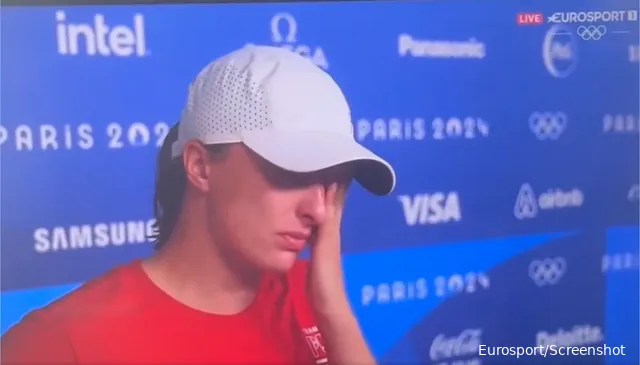
  • “Iga Świątek: ‘Przepraszam, ale z powodu ogólnego zmęczenia po ostatnich tygodniach na korcie muszę wycofać się z turnieju w Toronto'” – powiedziała Świątek w komunikacie prasowym Tennis Canada.

    “Iga Świątek: ‘Przepraszam, ale z powodu ogólnego zmęczenia po ostatnich tygodniach na korcie muszę wycofać się z turnieju w Toronto’” – powiedziała Świątek w komunikacie prasowym Tennis Canada.

    Katastrofa w Canadian Open: Gwiazdy Tenisa Rezygnują z Udziału w Wydarzeniu w Obliczu Historycznych Wycofań

    2024 Canadian Open, prestiżowe wydarzenie w kalendarzu tenisowym, zostało dotknięte serią dramatycznych wycofań, które wstrząsnęły światem tenisa. Wstrząsająca decyzja Igi Świątek, numeru 1 na świecie i pięciokrotnej mistrzyni wielkoszlemowej, ogłoszona niedawno, dodała nowy wymiar do tej sytuacji. Świątek ogłosiła swoje wycofanie z zawodów, co jest kolejnym poważnym ciosiem, zwłaszcza w kontekście braku innych wielkich nazwisk, takich jak Novak Djokovic i Carlos Alcaraz, co rzuca cień na nadchodzące turnieje ATP i WTA 1000 w Toronto i Montrealu.


    Decyzja Świątek o rezygnacji nastąpiła po wyczerpujących dwóch tygodniach, które zakończyła zdobyciem brązowego medalu na Igrzyskach Olimpijskich w Paryżu w 2024 roku. W oświadczeniu wydanym przez Tennis Canada Świątek wskazała na „ogólne zmęczenie” jako główny powód swojej decyzji. „Z powodu intensywnych wymagań ostatnich kilku tygodni, w tym Igrzysk Olimpijskich i przejścia między nawierzchniami, potrzebuję dodatkowego czasu na pełną regenerację. Chcę mieć pewność, że będę w szczytowej formie przed swingiem amerykańskim i będę mogła rywalizować na najwyższym poziomie” – powiedziała. Jej nieobecność dołącza do rosnącej listy czołowych zawodniczek, które będą brakować na torontońskim turnieju.


    Do tej rosnącej listy wycofań dołączyła również Barbora Krejcikova, numer 10 na świecie. Krejcikova, która osiągnęła znaczące wyniki na Igrzyskach Olimpijskich, docierając do ćwierćfinałów w singlu i deblu, również podała powody związane z zmęczeniem i potrzebą regeneracji jako motywację do rezygnacji z Canadian Open. Jej wycofanie pozostawia istotną lukę w składzie turnieju, zwłaszcza w kontekście skróconego okresu regeneracji po igrzyskach.


    Canadian Open, zaplanowany na 6-12 sierpnia, będzie cieniutkim odzwierciedleniem swojego zwyczajowego charakteru, z znaczną częścią czołowych dziesięciu zawodniczek WTA, które będą nieobecne. Oprócz Świątek i Krejcikovej, inne znaczące nieobecności to Elena Rybakina, Jasmine Paolini, Danielle Collins i Maria Sakkari. Wycofanie się Rybakiny z powodu ostrego zapalenia oskrzeli, po jej nieobecności na igrzyskach olimpijskich, oraz wycofanie Paolini, Collins i Sakkari, które uczestniczyły w Paryżu, jeszcze bardziej pogłębiają problemy organizacyjne turnieju.


    Po stronie męskiej sytuacja jest równie dramatyczna. Novak Djokovic i Carlos Alcaraz, obaj czołowi zawodnicy w pierwszej dziesiątce, zrezygnują z ATP Masters 1000 w Montrealu. Djokovic, numer 2 na świecie, oraz Alcaraz, numer 3, mają stanąć do walki o złoty medal w Paryżu 4 sierpnia, zaledwie kilka dni przed rozpoczęciem Canadian Open. Brak czasu na przejście na twarde korty w Montrealu skłonił ich do decyzji o wycofaniu się.


    Dodatkowo, Alex de Minaur, numer 6 na świecie, również wycofał się z wydarzenia w Montrealu. Kontynuacja rehabilitacji po kontuzji biodra, która również uniemożliwiła mu udział w igrzyskach olimpijskich, wpłynęła na jego decyzję o rezygnacji z Canadian Open.


    W nieoczekiwanym zwrocie losu, numer 1 na świecie Jannik Sinner ma szansę zabłysnąć w Montrealu, korzystając z nieobecności kluczowych rywali, Djokovic’a i Alcaraza. Sinner, który opuścił igrzyska olimpijskie z powodu zapalenia migdałków, teraz stoi przed doskonałą okazją, by obronić tytuł w Canadian Open przy znacznym zmniejszeniu konkurencji.


    Wycofania te wstrząsnęły społecznością tenisową, pozostawiając kibiców i analityków w stanie niepewności co do przyszłości Canadian Open. W obliczu tak wielu nieobecności, turnieje w Toronto i Montrealu zapowiadają się jako zarówno nieprzewidywalne, jak i historyczne.

  • ‘One of the biggest collapses, chokes of the year’: Golf stunned by Rahm’s Olympic disaster

    ‘One of the biggest collapses, chokes of the year’: Golf stunned by Rahm’s Olympic disaster

    Scottie Scheffler’s Spectacular Final Round: A Journey from Near Defeat to Olympic Glory

    In a dramatic display of skill and determination, Scottie Scheffler delivered the finest closing round of his career to capture Olympic gold. His performance, marked by composure and brilliance, culminated in a thrilling victory that had the sports world riveted.


    As the final moments of the tournament unfolded at Le Golf National, Scheffler showcased an unparalleled level of play. He began the final round trailing by four shots, and his prospects seemed dim as he fell six shots behind early on the back nine. However, the world’s No. 1 men’s golfer had other plans. Scheffler staged a breathtaking comeback, birdieing five of the last six holes and matching the course record with a 9-under 62. This remarkable finish earned him a one-shot victory over Tommy Fleetwood, capping off a tournament that was nothing short of a spectacle.


    The dramatic climax of the event saw Scheffler standing atop the podium, Olympic gold medal around his neck. As the national anthem played and the crowd of 30,000 roared, Scheffler’s emotions overcame him. With the medal hanging from his right hand and pressed against his chest, he raised his left arm to cover his tears. It was a poignant moment of vulnerability for the usually unflappable golfer, revealing the depth of his emotional investment in this historic win.


    “It’s been a long week. It’s been a challenging week,” Scheffler reflected after his victory. “I played some great golf today, and I’m proud to be going home with a medal.” He expressed admiration for his competitors, saying, “These guys played tremendous golf and I think we should all be proud of the golf that we played this week.”


    The final round of this Olympic golf tournament was a showcase of high drama and intense competition. Scheffler’s remarkable surge was the highlight, with a back nine score of 29 propelling him to the top. Fleetwood’s steady play, finishing with a 66, kept him in contention, while Hideki Matsuyama, despite having birdie opportunities on the final six holes, had to settle for a 65 and the bronze medal.


    The tournament also saw unexpected and dramatic collapses. Jon Rahm, who entered the final round with a four-shot lead, saw his chances evaporate with a double bogey that effectively ended his bid for gold. Rory McIlroy’s chances were dashed when he hit a wedge into the water, and Xander Schauffele, the reigning PGA and British Open champion, faltered with a 4-over par stretch over four holes, ending his hopes of another gold medal.


    Jason Day of Australia delivered a commendable performance, finishing ninth on the leaderboard. Yet, it was Rahm’s collapse that generated significant buzz. The reigning Masters champion, who had recently made headlines for his defection to LIV Golf, was clearly shaken by his performance. Golf pundit Brandel Chamblee described it as “one of the biggest collapses, chokes of the year,” drawing comparisons to McIlroy’s performance at the US Open.


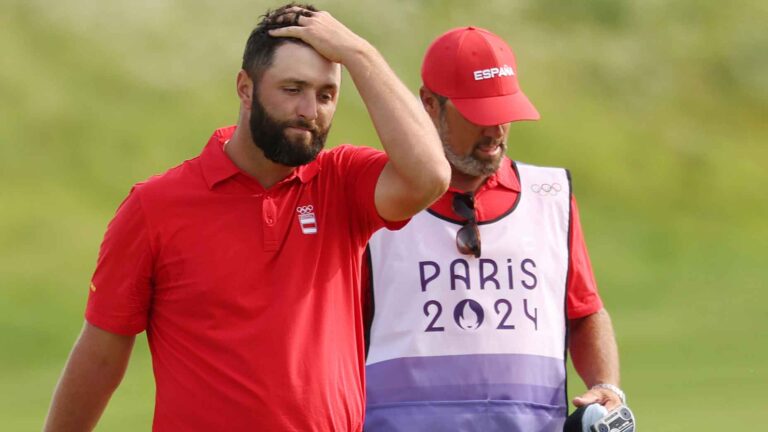
    Rahm’s reaction was one of deep disappointment. “I’ve been saying all week that I would know how much this means when the tournament was over,” Rahm said, his voice filled with emotion. “Sometimes you know when you win, but you definitely know when you don’t win it, and this just stings on a different emotional level. Hurts right now more than I expected.”


    For Scheffler, the path to victory was not immediately clear. He admitted that, at times, he was unsure of his position in the standings. “I saw that Rahm had gotten to 20-under, and so I kind of changed a little bit mentally to just really try to do my best to move my way up the leaderboard,” Scheffler said. “At one point, I didn’t even really know if I was in contention or not.”


    It was only after checking the leaderboard behind the 16th green that Scheffler realized his chance. On the 15th hole, he made an impressive wedge shot to within a foot, moving him within one shot of the lead. His birdie on the 17th and a decisive 8-iron shot on the 18th hole put him ahead for the first time in the tournament, securing the gold medal.


    Xander Schauffele, who had been a competitor in the tournament, expressed his admiration for Scheffler’s achievement. “He’s been piling up trophies left and right and he keeps moving away from what is the pack of people chasing him in the world,” Schauffele said. “When I take my competitive hat off and put my USA patriot hat on, I’m very happy that we won another gold medal.”


    Scottie Scheffler’s Olympic victory was a testament to his resilience and skill, providing a thrilling conclusion to a week of intense competition and unforgettable moments.

  • From Tiger Woods’ “Second-Place Sucks” to Tommy Fleetwood’s Olympic Triumph: A Tale of Silver Satisfaction

    From Tiger Woods’ “Second-Place Sucks” to Tommy Fleetwood’s Olympic Triumph: A Tale of Silver Satisfaction

    From Tiger Woods’ “Second-Place Sucks” to Tommy Fleetwood’s Olympic Triumph: A Tale of Silver Satisfaction


    SAINT-QUENTIN-EN-YVELINES, France — In the realm of elite professional golf, the sentiment towards finishing second has traditionally been one of disappointment. Tiger Woods, a paragon of competitive spirit, famously declared, “Second-place sucks.” This assertion underscores the high stakes and intense drive that define the sport. However, the narrative shifts dramatically when the setting moves from the familiar confines of professional tournaments to the global stage of the Olympics.


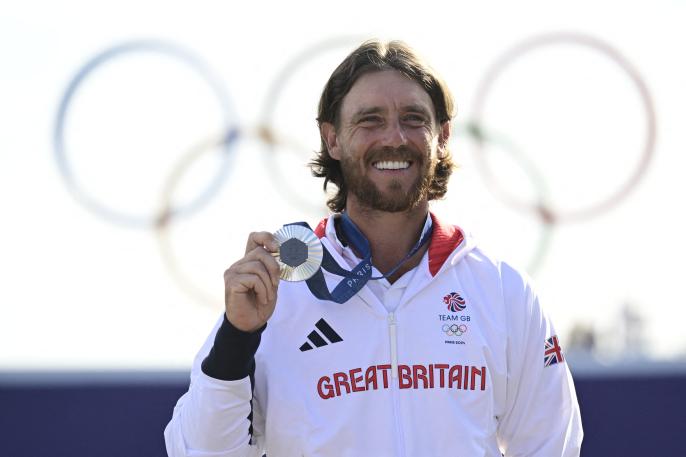
    At the Tokyo 2020 Olympics, which were held in 2021 due to the pandemic, the men’s golf competition delivered an exhilarating finale that showcased a different perspective on the value of silver and bronze medals. Tommy Fleetwood, who secured the silver medal, and Hideki Matsuyama, who claimed the bronze, each offered a unique take on their achievements that starkly contrasts with Woods’ philosophy.


    Fleetwood, renowned for his tenacity and skill on the golf course, came into the final round with a palpable sense of both excitement and pressure. He was engaged in a fierce battle with Scottie Scheffler, who surged ahead with a remarkable performance on Sunday. Fleetwood, despite his best efforts, faltered slightly on the 71st hole with a bogey that cost him a shot at gold. Yet, his resilience shone through as he made a crucial six-foot putt for par on the 72nd hole to clinch the silver medal.


    In an era where Olympic golf was a novel addition to the sport, Fleetwood reflected on the profound significance of his achievement. “Just as a young boy that was taking up the game of golf, none of us here had the chance to dream of being an Olympian or winning an Olympic medal,” Fleetwood said. “So it was never on our agenda until golf finally got in.” His sentiments capture the essence of Olympic participation, where the mere opportunity to compete on such a grand stage transforms personal and professional milestones into something deeply meaningful.


    Fleetwood’s experience on the final day was not without its trials. He maintained a steady pace throughout his round while Jon Rahm and Scheffler made their respective moves. A birdie on the challenging 16th hole allowed Fleetwood to draw even with the world’s No. 1 player, Rahm. However, the 17th hole presented a formidable challenge. Fleetwood’s approach shot from the rough on the uphill 17th bounded through the green, leaving him with a difficult lie. A subsequent bogey on 17, coupled with a challenging pitch on the 18th, left him in a precarious position. Despite the setbacks, Fleetwood’s closing putt, which secured the silver medal, was met with enthusiastic cheers and applause from the crowd, many of whom waved Union Jacks in support of the former Le Golf National champion and Ryder Cup hero.


    Matsuyama’s journey to bronze was equally compelling. After a less-than-stellar performance on Saturday with a score of 71, Matsuyama found himself on the periphery of medal contention. Yet, his determination shone through as he rebounded with a final-round 65, overtaking French hero Victor Perez to clinch the bronze medal. Matsuyama’s performance exemplified the essence of Olympic spirit — perseverance, resilience, and the ability to rise to the occasion under pressure.


    Fleetwood’s reflection on his Olympic experience reveals a deep appreciation for the unique nature of the event. “It was very, very enjoyable, it really, really was,” he shared. “I think the leaderboard was unbelievable. You know, I just think it was a great spectacle for golf being out there and being part of that.” His words highlight the special place that the Olympics holds, transforming the conventional pursuit of victory into a celebration of global athletic excellence.


    The significance of Fleetwood’s silver medal and Matsuyama’s bronze cannot be understated. While Tiger Woods’ view of second place may dominate the discourse in professional golf, the Olympic Games provide a broader perspective where silver and bronze hold their own special value. For Fleetwood and Matsuyama, the medals represent a momentous achievement that transcends the traditional boundaries of professional golf, reflecting a unique blend of personal triumph and global recognition.


    As Fleetwood aptly noted, the Olympics are a rare and cherished opportunity, occurring only every four years. “This isn’t going to happen again now for four years,” he said, acknowledging the fleeting nature of such an experience. Despite his initial disappointment in not securing gold, Fleetwood’s experience underscores the profound sense of accomplishment and joy that can be derived from competing on the world’s most prestigious stage.


    In the end, for Fleetwood and Matsuyama, the Olympic medals are not merely accolades but treasured symbols of their dedication, skill, and the remarkable journey that brought them to the global spotlight.

  • Rory McIlroy’s Olympic Heartbreak: How a Costly Mistake Drowned His Medal Hopes and Extended His Agonizing Near-Miss Streak

    Rory McIlroy’s Olympic Heartbreak: How a Costly Mistake Drowned His Medal Hopes and Extended His Agonizing Near-Miss Streak


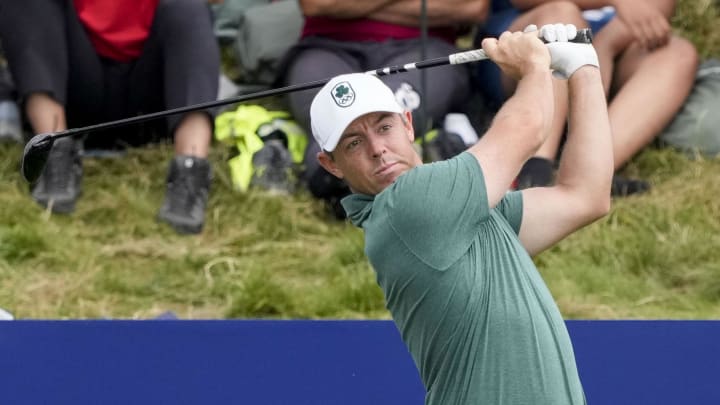
    SAINT QUENTIN-EN-YVELINES, France — In a dramatic turn of events at the Olympic golf tournament, Rory McIlroy found himself grappling with an agonizing close call that seemed almost scripted to torment him. The Irish golfer, already familiar with the sting of near-misses, faced yet another crushing disappointment as a golden opportunity slipped through his fingers—quite literally—into the water.


    McIlroy had ignited hopes of an Olympic breakthrough with an electrifying performance on the back nine. After an incredible five consecutive birdies, he surged to within striking distance of the leaders. The momentum seemed unstoppable. But just when victory appeared within reach, fate intervened in a way that seemed almost cruelly poetic.


    On the 15th hole, a seemingly straightforward par-4 turned into a nightmare. Standing at just 140 yards from the green, McIlroy aimed to capitalize on his earlier momentum with a wedge shot intended to set up yet another birdie. However, the shot he thought he executed perfectly fell victim to the unforgiving wind, landing short and plunging into the water hazard. The resultant double bogey shattered his hopes, leaving him with a painful reminder of how fine the line between glory and despair can be in professional sports.


    Despite his best efforts, which included a final-round 66 that showcased his resilience, McIlroy’s total score left him tied for fifth place. This finish, though commendable, was a bitter pill to swallow, especially in the face of such a near-miss. With Scottie Scheffler seizing the gold medal with a stellar 62, and Tommy Fleetwood and Hideki Matsuyama finishing ahead, McIlroy’s failure to convert on the 15th hole meant he finished four strokes behind Scheffler and just one shot away from a medal.


    Reflecting on the critical moment, McIlroy described his experience as a haunting echo of past failures. “When I got to 10 and 11, I looked at the board and I was 14 (under) and Jon [Rahm] had got to 20. I didn’t feel like I had a chance. Then I looked at the board again after I birdied 14 and I was one behind and I was like, holy sh-t, what just happened,” he recounted, frustration evident in his voice.


    The pivotal shot on the 15th was intended to be a routine play, but McIlroy’s execution was undermined by the wind. “I hit the shot I wanted to hit but didn’t get the ball in the air enough for the wind to carry it the extra 3 or 4 yards I needed to,” he explained. The failure to reach his intended spot cost him dearly, emphasizing how a small error can dramatically alter a golfer’s fate.


    McIlroy’s recent string of near-misses has only compounded the pain. From the U.S. Open, where late bogeys dashed his playoff hopes, to his struggles at other major tournaments, McIlroy has been dubbed golf’s ‘Nearly Man’—a moniker that encapsulates his persistent inability to convert close calls into victories. The Olympic disappointment adds another chapter to a story of agonizing near-successes that have plagued his career.


    This year, McIlroy did secure three victories—at the Dubai Desert Classic, the Zurich Classic of New Orleans, and the Wells Fargo Championship—but those wins stand in stark contrast to his failures at the Masters, PGA Championship, and the British Open. His performance at the U.S. Open was particularly distressing, leading him to withdraw from the following week’s tournament.


    With the FedEx Cup playoffs on the horizon, McIlroy intends to take a brief respite to enjoy other Olympic events before returning to competitive play. Yet, the sting of his latest setback will likely linger as he strives to overcome the ‘Nearly Man’ tag and finally convert his close calls into lasting triumphs.


    As McIlroy prepares to tackle the next chapter of his season, the question remains: will he be able to turn his near-misses into a triumph, or will he continue to wrestle with the agonizing proximity of victory? Only time will tell if the tide will turn for the Irish golfer.

  • Brandel Chamblee offers searing take on Jon Rahm’s Olympic collapse

    Brandel Chamblee offers searing take on Jon Rahm’s Olympic collapse

    Brandel Chamblee offers searing take on Jon Rahm’s Olympic collapse


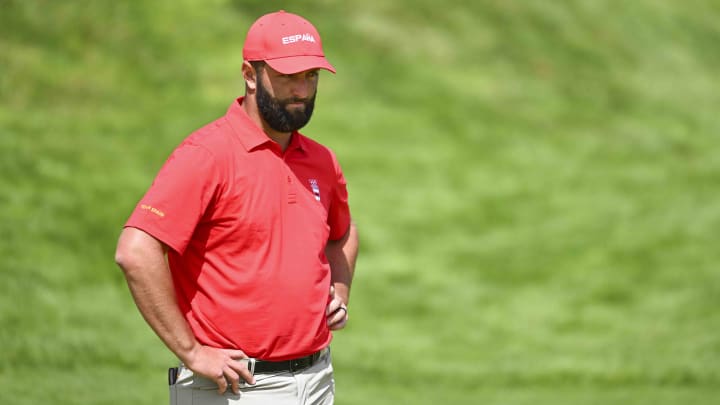
    In the final round of the men’s golf competition at the 2024 Paris Olympics, the stage was set for an extraordinary conclusion. Jon Rahm, who entered the day as the co-leader after 54 holes, found himself in a commanding position with a four-shot lead and a sizzling front-nine 31. As the golf world watched in anticipation, Rahm’s strong performance on the front nine seemed to ensure his dominance, but the back nine brought a dramatic reversal.


    Scottie Scheffler, who had been trailing six shots behind Rahm at the turn, staged a remarkable comeback. With an impressive bogey-free round of 62 that included birdies on four of his last five holes, Scheffler managed to close the gap and secure the gold medal. His final score allowed him to edge out Tommy Fleetwood, who claimed the silver medal, by a single stroke. Hideki Matsuyama, who also surged in the final round, finished two shots behind Scheffler to take the bronze medal.


    Rahm’s back nine collapse, characterized by a dismal 39, sparked intense scrutiny and criticism. On Golf Channel’s “Golf Central,” analyst Brandel Chamblee did not hold back in his assessment of the situation. “That was just about the wildest back nine that you could ever imagine, ever predict,” Chamblee remarked. He highlighted the stark contrast between Rahm’s dominant position and Scheffler’s remarkable rally. “Jon Rahm had a four-shot lead in the gold position, and Scottie Scheffler, starting six shots back, wins gold without a playoff. One shoots 29 on the back nine, and Jon Rahm shoots 39.”


    Chamblee labeled Rahm’s performance as one of the most significant collapses of the year, drawing comparisons to Rory McIlroy’s struggles at the U.S. Open. He pointed out that Rahm’s back nine was riddled with mistakes, including a brutal four-hole stretch from Nos. 11 to 14 where Rahm carded two bogeys and a double bogey. Although Rahm managed to birdie the par-3 16th hole, he faltered again with two more bogeys on the final two holes, Nos. 17 and 18.


    Throughout the tournament, Rahm had exhibited exceptional skill, leading in key statistics such as fairways hit, driving distance, and greens in regulation. Chamblee noted that Rahm’s performance was marred by recurring issues with a “double cross,” a flaw in his swing that became evident on the back nine. He also highlighted the impact of several three-putts, which compounded Rahm’s difficulties.


    In the aftermath of the round, Rahm spoke to Golf Channel’s Rex Hoggard about the emotional weight of his performance. “For about 97 percent of the week, it has been fantastic,” Rahm said. He praised the crowd, the golf course, and the overall experience, despite the pain of his late collapse. “The week has been great, and it’s just a four-hole stretch where I could say I wasn’t happy. Besides that, it’s been a really good tournament.”


    Rahm acknowledged the profound sense of disappointment he felt. “It’s hard to let my country down in that way,” he admitted. He expressed that the emotional sting of not winning was more intense than he had anticipated. Rahm also reflected on his performance, saying, “Had it under control and just let it go. That’s all I can say.” When asked about future motivation, Rahm was cautious, noting that while he anticipated the experience might fuel his drive for future competitions, he was still processing the immediate disappointment.


    Looking ahead, Rahm’s chances of redemption could come in the 2028 Olympics in Los Angeles, where the host course will be Riviera. This venue holds positive memories for Rahm, as he won the Genesis Invitational there in 2023. If he qualifies and competes in the next Olympic Games, Rahm will have another opportunity to make his mark on the global stage and potentially secure a coveted Olympic medal.

  • Men’s Olympic Golf Winners and Losers: Scottie Scheffler Rises, Jon Rahm Collapses

    Men’s Olympic Golf Winners and Losers: Scottie Scheffler Rises, Jon Rahm Collapses

    Men’s Olympic Golf: Winners and Losers from a Dramatic Week

    The 2024 men’s Olympic golf tournament concluded with dramatic flair, highlighting the extraordinary highs and lows of professional golf. At the forefront of this year’s Olympic story was Scottie Scheffler, who cemented his remarkable season with a gold medal. Conversely, Jon Rahm’s disappointing finish was a stark reminder of how quickly fortunes can change in this sport.

    Winners

    Scottie Scheffler:

    Scottie Scheffler’s performance was nothing short of spectacular. The world No. 1 golfer delivered an impeccable final round, carding a bogey-free 9-under-par 62 to capture the gold medal. Scheffler’s triumph added a prestigious Olympic title to his already impressive resume, which includes multiple major victories and numerous Tour trophies. The victory underscored his dominance in the sport, especially after discussions about whether Xander Schauffele’s two major wins this year could rival Scheffler’s achievements. Scheffler’s gold medal weighed in at 529 grams, symbolizing not just his Olympic victory but the culmination of an extraordinary year.

    Golf at the Olympics:

    The Olympic golf event on Sunday was a testament to the sport’s growing significance on the global stage. The competition drew enthusiastic crowds, reflecting the increasing importance and excitement surrounding golf in the Olympics. This year’s event demonstrated that the best players in the world are starting to value the Olympic tournament as a significant achievement, a far cry from the initial skepticism surrounding golf’s place in the Games. The display of skill and passion on Sunday was as captivating as any major tournament this year, setting a high bar for future Olympic golf events.

    Tommy Fleetwood:

    Tommy Fleetwood, who secured the silver medal, experienced a bittersweet end to his Olympic journey. A late bogey on the 71st hole and a pulled approach shot on the final hole dashed his hopes of clinching gold. Despite the near miss, Fleetwood’s performance throughout the week was commendable. Playing in front of a supportive crowd at Le Golf National, he continued his ascent on the list of the best players without a major victory. His silver medal, though tinged with disappointment, is a testament to his consistent excellence.

    Victor Perez:

    French golfer Victor Perez delivered a remarkable performance, finishing just one shot shy of a medal. His final round was nothing short of extraordinary, with a back-nine 29 contributing to a round of 63. Perez’s impressive rally captivated the home crowd and highlighted his potential on the international stage. His performance was only surpassed by Scheffler’s final round, marking a memorable finish to the tournament for Perez.

    Wyndham Clark:

    Wyndham Clark’s journey through the tournament was one of resilience. After a rough start, with a 4-over-par score after his first three holes, Clark managed to turn his game around impressively. He played the remainder of the tournament at 15-under-par, including back-to-back 65s over the weekend. His final position in a tie for 14th place is a testament to his ability to bounce back from early adversity. Clark’s strong finish could be a precursor to a successful run in the PGA Tour playoffs.

    Losers

    Jon Rahm:

    Jon Rahm’s Olympic experience was marred by a dramatic collapse on the back nine. After holding a commanding four-shot lead, Rahm’s performance faltered significantly, resulting in a back-nine 39. This collapse saw him drop out of medal contention, leaving him visibly disheartened. Rahm’s reaction, describing the outcome as something that would “sting for a while,” reflects the weight of this setback on what has been a challenging year for the Spaniard.

    Viktor Hovland:

    Viktor Hovland’s performance was another disappointment. Despite finishing with rounds of 67 and 68 over the weekend, Hovland’s overall showing was underwhelming. His tie for 30th place in a 60-man field highlights a season of inconsistency following his FedEx Cup win in 2023. With his current position at 55th in the playoff standings, Hovland faces a challenging road ahead, potentially missing out on key playoff events if his form doesn’t improve.

    Rory McIlroy:

    Rory McIlroy’s pursuit of an Olympic medal was thwarted by a crucial mistake. Despite a promising start to his back nine with five consecutive birdies, a double bogey on the 15th hole derailed his chances. This misstep added to a growing list of near misses and what-ifs that have defined McIlroy’s career over the past decade. His finish underscored the ongoing challenge of translating strong performances into tangible victories.

    Xander Schauffele:

    While not entirely deserving of the “loser” label, Xander Schauffele’s Olympic defense fell short of expectations. After sharing the lead heading into the final round, Schauffele’s performance unraveled with a 2-over-par 73, the worst score among the top 30 finishers. Despite an early lead and a promising start, his inability to maintain form through the final round highlighted the unpredictable nature of the game.

    Conclusion

    The 2024 men’s Olympic golf tournament was a showcase of both triumph and heartache, reflecting the highs and lows of competitive golf. Scottie Scheffler’s gold medal performance was a highlight, demonstrating his exceptional skill and consistency. Meanwhile, the struggles of players like Jon Rahm and Rory McIlroy served as a reminder of the relentless challenges faced by even the best in the sport. As the golf world reflects on this event, it’s clear that Olympic golf is gaining significance, and the next tournament will undoubtedly build on the excitement and drama of this year’s competition.

  • The seventh win for Scottie Scheffler came with no money or FedEx Cup points but a gold medal instead.

    The seventh win for Scottie Scheffler came with no money or FedEx Cup points but a gold medal instead.

    Before the Olympics, Scottie Scheffler’s achievements had already established him as a top golfer, with six wins, including a major triumph at the Masters. Despite this impressive record, there was room for debate about whether he deserved to be named Player of the Year. However, any doubts were dispelled following his remarkable performance at the Olympic Golf Competition, culminating in a dramatic final round and a triumphant podium appearance to claim his gold medal.


    Scheffler, currently holding the position of the world’s number one golfer, has been on an extraordinary run, with achievements comparable only to those of Tiger Woods over the past three decades. His recent performance at the Olympics further cemented his status among the elite.


    Reflecting on his challenging week at the Olympics, Scheffler admitted, “I felt like at times this week I got more frustrated than I normally do. It was a pretty challenging week there for a while just because I felt like I was doing a lot of things well and I wasn’t getting a lot out of it at times. You know, just watching great players fly up the leaderboard, I felt like they were getting further and further away from me sometimes.”


    Starting the final round four shots behind Jon Rahm and Xander Schauffele, the reigning gold medalist, Scheffler made an impressive start with three consecutive birdies, quickly narrowing the gap between him and the leaders. Despite this strong beginning, the rest of the front nine was relatively uneventful for Scheffler, while Rahm surged ahead, making five birdies in the first ten holes. Rahm’s performance pushed Scheffler and others further away from the top spot, making it seem as if only silver and bronze were within reach.


    However, the dynamics of the game shifted as Rahm began to falter. He made bogeys on the 11th and 12th holes, which allowed Scheffler and the rest of the field to close the gap. Rahm’s troubles continued when he made a double bogey on the 14th hole, reopening the possibility of gold for those chasing him.


    Scheffler seized the opportunity as he made the turn. He put together a stellar performance on the back nine, with six birdies, including four consecutive birdies between the 14th and 17th holes. This surge moved him from trailing Rahm to a tie with Tommy Fleetwood, who had also been in contention.


    The tie was short-lived as Fleetwood stumbled with a bogey on the 17th hole, allowing Scheffler to edge ahead and secure a one-shot victory. Scheffler noted that he and his caddie, Teddy Scott, didn’t engage in extensive strategic discussions throughout the day. Instead, they focused on maintaining patience and staying composed. “I saw that Rahm had gotten to 20-under, and so I kind of changed a little bit mentally to just really try to do my best to move my way up the leaderboard. At one point, I didn’t even really know if I was in contention or not,” Scheffler recalled. “I just tried to do my best to make some birdies and start moving up and maybe get a medal or something like that just because Jon is such a great player.”


    Scheffler was aware of the challenges posed by Le Golf National, but the week’s conditions, characterized by rain and minimal wind, made the course more forgiving than usual. This presented an opportunity for aggressive play, and Scheffler aimed to capitalize on it. “I was doing my best. Once I started making some birdies to try to get to 19-under and give myself a chance to get in,” Scheffler said. “I was fortunate to execute some shots there down the stretch. The putt that I hit on 17, I was aware that I think Rahm had gotten into some trouble there on 13 or 14, and Tommy wasn’t able to birdie 14, so I felt like that was a pretty important putt with just how challenging the closing holes are.”


    As the competition neared its conclusion, Scheffler was on the driving range preparing for a potential playoff with Fleetwood, the only player with a chance to surpass him. When Fleetwood’s final chip shot missed the mark, Scheffler’s seventh win of 2024 was secured without the need for a playoff.


    With a gold medal draped around his neck, Scheffler reflected on his achievements with a sense of contentment rather than concern for his legacy. “I don’t really overthink about my legacy as a golfer; that’s not really something that comes to mind,” Scheffler said. “I love being out here competing. It’s one of my favorite things in the world to do, and it’s a great joy in my life. I’m proud to be out here competing.”


    Scheffler’s remarkable performance at the Olympics has not only elevated his career but has also underscored his position as one of the top golfers in the world. His resilience and strategic adjustments during the final round showcased his elite skills and determination, solidifying his place among golf’s greats.

  • Tiger Woods always despised second place. That philosophy doesn’t work at the Olympics, where Tommy Fleetwood is ecstatic with silver

    Tiger Woods always despised second place. That philosophy doesn’t work at the Olympics, where Tommy Fleetwood is ecstatic with silver

    SAINT-QUENTIN-EN-YVELINES, France — Normally in elite professional golf, there’s not much satisfaction in not winning. As Tiger Woods once legendarily proclaimed, “Second-place sucks.”

    After a rousing finish to close out the men’s Olympic golf competition, both silver medalist Tommy Fleetwood and bronze medalist Hideki Matsuyama would offer a different assessment.

    Fleetwood fell short of Scottie Scheffler’s Sunday charge, bogeying the 71st hole to drop out of a tie for the gold medal, but he drained a six-footer for a closing par to secure the silver. Matsuyama, after a mediocre 71 on Saturday left him on the outside staring in at medal contention, rallied with a final-round 65 to finish a stroke ahead of French hero Victor Perez to win the bronze medal.

    Fleetwood, who’s won 10 times in his professional career, made the point that an Olympic medal wasn’t something he ever had a reason to think of because it wasn’t part of golf. Now, it resides in a fundamentally special place.

    “Just as a young boy that was taking up the game of golf, none of us here had the chance to dream of being an Olympian or winning an Olympic medal,” he said. “So it was never on our agenda until golf finally got in.

    “That quickly changes when you’re part of the Olympics. It feels unbelievably special. I know I didn’t win gold today, and a very good golfer did. Standing on that podium with a medal in front of the crowd was one of the most amazing moments I’ve had as a golfer, so I’ll remember all those times for the rest of my life.”

    Looked at more critically, Fleetwood easily could have been the most disappointed, holding steady throughout his round while Jon Rahm surged to a lead and then Scheffler rallied. A birdie on the nervy, watery 16th hole put him even with the No. 1 player in the world, but his approach from the rough on the long, uphill 17th bounded through the green, leaving him with nothing to work with and a difficult lie. The bogey dropped him out of the lead and then his approach shot on 18 settled beyond the green. The delicate pitch downhill gave the hole a look before settling six feet by. The putt drew broad cheers and flag-waving from a crowd interspersed with Union Jacks for the man who won at Le Golf National in 2017 and helped lead the European team to a win at the Ryder Cup a year later with his 4-1 record.

    “It was very, very enjoyable, it really, really was,” he said. “I think the leaderboard was unbelievable. You know, I just think it was a great spectacle for golf being out there and being part of that. If you’re not going to enjoy those times, then you know, you’re not going to get much happiness from the game of golf.

    “I enjoyed competing against the best players in the world for something that is so sought after and so cherished. This isn’t going to happen again now for four years. You’re always aware of that. Even on the last for me, normally I’d have sort of given that chip a go. I missed it, and I know I’ve lost the tournament, but I was still pretty nervous trying to get that Silver Medal over that 6-footer.”

    Finishing second, at least in this instance, clearly didn’t suck.


  • Former ASU Golfer Jon Rahm Fails to Secure Medal at Paris 2024 Olympics After Dramatic Final Day Collapse

    Former ASU Golfer Jon Rahm Fails to Secure Medal at Paris 2024 Olympics After Dramatic Final Day Collapse

    Former ASU Golfer Jon Rahm Fails to Secure Medal at Paris 2024 Olympics After Dramatic Final Day Collapse

    As the Paris 2024 Olympics drew to a close, all eyes were on Jon Rahm, the former Arizona State University (ASU) golfer who had entered the final day of the men’s golf tournament as the frontrunner for gold. Rahm, who had performed exceptionally throughout the earlier rounds, seemed poised to claim his first Olympic medal. However, the final day at Le Golf National would turn into a dramatic and disappointing chapter in his career.


    Rahm began the final round with a commanding four-shot lead, having delivered a stellar performance on the front nine, marked by a remarkable score of 31. The Spanish golfer appeared on track to fulfill his potential and secure a historic victory for Spain. His performance suggested a golden outcome was within reach.


    However, the narrative took a sharp turn on the back nine. Rahm’s once-imposing lead began to evaporate as he faced a series of uncharacteristic mishaps. His struggles started at the par-3 11th hole. Despite sinking a 30-foot birdie putt, Rahm’s ball was left only 3-4 feet from the hole. Unfortunately, his subsequent attempt to complete the hole resulted in his first bogey of the day as the ball rimmed out.


    The problems continued to mount as Rahm encountered difficulties at the 12th hole. A poor shot landed him in a bunker, and his efforts to recover from this setback were unsuccessful, resulting in a missed par from 15 feet away. The situation deteriorated further at the par-5 14th, where Rahm suffered a double bogey. This was a stark contrast to his earlier rounds in the tournament, where he had showcased his prowess with an eagle and two birdies over three previous rounds.


    The sequence of errors did not end there. Rahm also missed a crucial 10-foot birdie putt on the 15th hole and failed to convert an 8-foot par attempt on the 17th. The cumulative impact of these mistakes was significant, leading to a disheartening back-nine score of 39. This sharp decline saw Rahm drop from his leading position to a tie for fifth place. He ended the tournament with a score of 70, four shots behind the eventual winner, American golfer Scottie Scheffler, who set an Olympic record with an astonishing final-round score of 62. Rahm also fell behind bronze medalist Hideki Matsuyama from Japan, who finished just two shots ahead.


    The outcome was a significant letdown for Rahm, whose earlier form had suggested that a gold medal was within his grasp. The dramatic fall from a commanding lead to a disappointing fifth place raised numerous questions about what had gone wrong on the final day.


    The magnitude of Rahm’s collapse did not go unnoticed by the golfing community. Brandel Chamblee, analyst for Golf Channel’s “Golf Central,” did not mince words when assessing Rahm’s performance. “I’m gonna put that down as one of the biggest collapses, chokes of the year,” Chamblee commented, highlighting the gravity of the situation.


    Looking ahead, there remains the possibility that Rahm might choose to continue his Olympic career despite this setback. If he decides against retiring from Olympic golf, there could be an opportunity for him to return and compete in the Los Angeles 2028 Olympics, potentially using this experience as motivation to come back stronger.


    The Paris 2024 Olympics provided a dramatic and poignant chapter in Jon Rahm’s career, illustrating both the high stakes and the unpredictability of competitive golf on the world stage.